
Geometric Random Variable Expected Value for Casino Waits
Why the average wait for a first success is 1/p, what that means on a 38-number roulette wheel, and why a long dry spell never makes the next hit due.
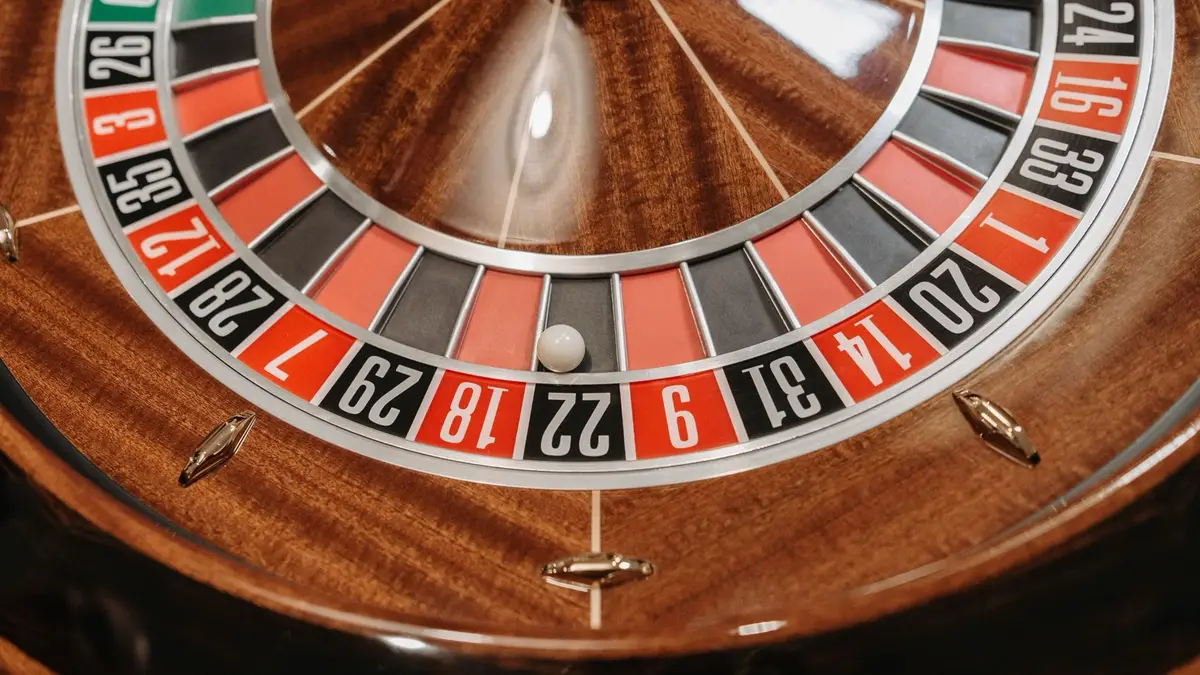
Photo: Pavel Danilyuk on Pexels
Jump to a section
- 01What is a geometric random variable?
- 02How do you find the expected value of a random variable like this?
- 03How long do you wait for a straight-up roulette number?
- 04Why doesn't a dry spell make the next hit more likely?
- 05What does the average wait mean for a betting progression?
- 06Guide questions
- Is the expected value of a geometric random variable always 1/p?
- How many spins does a single roulette number take on average?
- Does a long losing run make the next win more likely?
- Does a betting progression change the wait?
- 07More guides
- 08Sources and further reading
The expected value of a geometric random variable is 1/p: if each try succeeds with probability p, the average number of tries up to and including the first success is one divided by p. At a US double-zero roulette wheel, a single number has a 1 in 38 chance on each spin, so you wait 38 spins on average for it to land. The same formula shows why long dry spells are ordinary and never make the next hit closer.
What is a geometric random variable?
A geometric random variable N counts how many independent tries it takes to get the first success, when every try has the same success chance p. It takes the values 1, 2, 3 and so on, with no upper limit.
The probability that the first success arrives on try k is the chance of k - 1 failures followed by one success:
P(N = k) = (1 - p)^(k - 1) × p
Casino waits fit this shape whenever rounds are independent and the odds never change: spins until a chosen roulette number hits, or rounds until a progression gets its win.
How do you find the expected value of a random variable like this?
To find the expected value of a random variable, multiply each possible value by its probability and add the results. For a geometric wait that sum runs forever, but a shorter route gets there.
Look at the first try. With probability p it succeeds and the wait is 1. With probability 1 - p it fails, and you are back where you started, because the remaining wait has the same distribution as the original one. So the expected wait E satisfies:
E = 1 + (1 - p) × E
Subtract (1 - p) × E from both sides and you get p × E = 1, so E = 1/p. For a fair coin, which a rational decision-maker treats as 50-50, p is 1/2 and the average wait for the first head is 2 tosses.
How long do you wait for a straight-up roulette number?
On a double-zero wheel you wait 38 spins on average for one chosen number, because the layout carries 38 single numbers: 1 to 36, plus 0 and 00. With p = 1/38, the expected value is 1/p = 38.
The average hides how spread out the waits are. The chance that a number has still not appeared after n spins is (37/38)^n:
| Spins already played | Chance the number has not hit yet | Chance it has hit at least once |
|---|---|---|
| 10 | 76.6% | 23.4% |
| 26 | 50.0% | 50.0% |
| 38 | 36.3% | 63.7% |
| 76 | 13.2% | 86.8% |
| 114 | 4.8% | 95.2% |
Half of all waits are over by spin 26, yet more than a third last past the 38-spin average. A wait two or three times the average is unusual, not suspicious.
The payout is where the house edge sits. As of November 2026, Turning Stone pays a single number 35 to 1, and 0 and 00 pay the same as any other number. A fair price for a 1 in 38 chance would be 37 to 1, so every number is paid a little short. That shortfall is what drives a negative expected value per bet.
Why doesn't a dry spell make the next hit more likely?
A geometric wait is memoryless: having already waited m spins tells you nothing about how many more you need. Given that N is past m, the remaining wait is distributed like N. After 60 empty spins the expected wait for your number is still 38 more spins, not a handful.
A study of real decisions summarised by the NBER found that asylum judges were 3.3 percentage points likelier to reject a case after approving the previous one, as if a run of one outcome had to be balanced by the other. That expectation is the gambler's fallacy, and the wheel does not share it.
What does the average wait mean for a betting progression?
A progression changes stake sizes, not waiting times. Raise the bet after each loss and the rounds to the first win are still geometric. What grows is the money staked while you wait, which is why a roulette Martingale strategy hits table limits more often than players expect, and why a plan from a bankroll management calculator should be sized for the long tail of the table above rather than the average.
Guide questions
Is the expected value of a geometric random variable always 1/p?
Yes, when N counts the tries up to and including the first success and every try has the same chance p. If you count only the failures before the first success, the average is one less, (1 - p)/p.
How many spins does a single roulette number take on average?
On a wheel with 38 numbers, including 0 and 00, the chance per spin is 1/38, so the average wait is 38 spins. About half of all waits are over by spin 26, while a few run far longer and pull the average up.
Does a long losing run make the next win more likely?
No. The geometric distribution is memoryless: once you have already waited, the spins still to come have the same distribution as a fresh start. Each spin keeps the same 1/38 chance.
Does a betting progression change the wait?
No. A progression changes how much is staked while you wait, not how long the wait is. The number of tries to the first win still follows the same geometric distribution.
More guides
- Binomial Distribution Expected Value for Roulette Bets
- Expected Value Definition, Worked Through Casino Bets
Sources and further reading
- Turning Stone Resort Casino, How to Play Roulette: Basic Rules & Payouts, accessed November 2026
- National Bureau of Economic Research, The Gambler's Fallacy, summary of Chen, Moskowitz and Shue, June 2016
- Random: Probability, Mathematical Statistics, Stochastic Processes, The Geometric Distribution, accessed November 2026
Topic of this guide
Pass it on


Choosing where to play? See the casinos we cover and our take on each.
Where to play