
Keno House Edge: Why It Changes With Every Spot Count
Hypergeometric odds against Ohio and Delaware paytables put keno's edge between 35% and 50%, and it moves with how many numbers you mark.
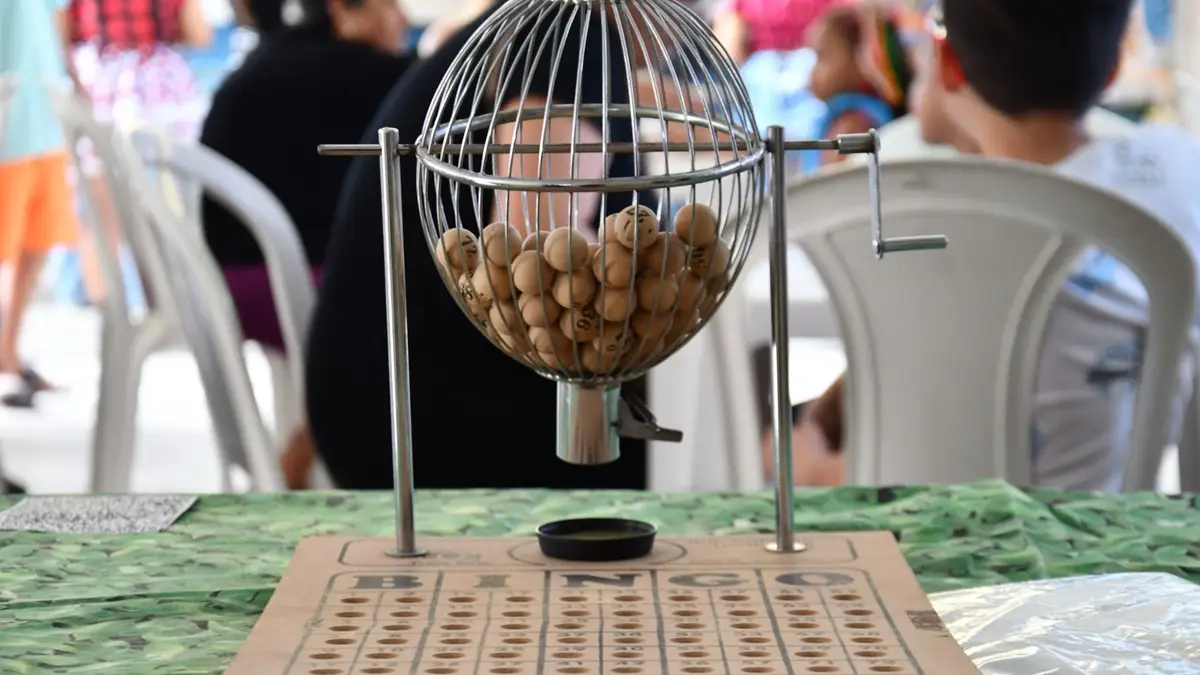
Photo: Anderson Rodrigues on Pexels
Jump to a section
- 01How keno odds are calculated
- 02How the house edge is worked out from a paytable
- 03Keno house edge by spot count
- 04Same odds, different paytable, different edge
- 05Why more picks rarely mean more value
- 06What the lottery says it returns overall
- 07Stake size does not change the percentage
- 08Guide questions
- How do you play keno in a bar?
- What is the smartest keno bet?
- Has anyone ever hit all 10 numbers in keno?
- Does betting more per game change the keno house edge?
- 09Sources and further reading
The keno house edge on US lottery keno runs from about 35 percent to 50 percent of every dollar staked, and it is not one fixed number. It changes with how many numbers you mark, because each spot count has its own paytable. On the Ohio Lottery tables (as of October 2026), a 1-spot ticket keeps 50 cents of each dollar, a 4-spot keeps about 35 cents and a 10-spot about 36 cents.
Those figures come from two inputs: the probability of each number of matches, which is fixed by the draw, and the prize the lottery pays for it, which each state sets. This guide works through both.
How keno odds are calculated
Every keno ticket faces the same draw. Ohio players mark 1 to 10 numbers from a pool of 80, and 20 balls are drawn from the field of 80. The chance of matching exactly k of your n marked numbers follows the hypergeometric distribution:
P(k matches) = C(n, k) x C(80 - n, 20 - k) / C(80, 20)
C(a, b) counts the ways to choose b items from a. In plain terms: the ways to hit k of your numbers, times the ways the remaining drawn balls miss your other numbers, divided by every possible 20-ball draw.
The formula reproduces the odds the lotteries print. A 1-spot ticket matches 1 time in 4, a 4-spot pays something 1 time in 3.86, and a 10-spot pays something 1 time in 9.05. Those are the same figures on the Ohio keno odds and payouts page, which is a useful check that the maths below matches what the lottery uses.
How the house edge is worked out from a paytable
Expected return is the sum, across every paying result, of probability times prize. House edge is what is left of the dollar: 1 minus the expected return. A table makes the 1-spot case easy to follow.
| 1-spot result | Probability | Prize per $1 | Contribution |
|---|---|---|---|
| 1 match | 1 in 4 | $2 | 50 cents |
| 0 matches | 3 in 4 | $0 | 0 cents |
| Expected return | 50 cents |
The Ohio 1-spot paytable pays $2 on a match at odds of 1 in 4, so the expected return is 50 cents and the house edge is 50 percent. Paying even money on a 1 in 4 event is the whole story of that ticket.
Keno house edge by spot count
Running the same sum against each published paytable gives the edge for that spot count. Delaware and Ohio share identical hit probabilities, so any difference below comes only from prizes.
| Ticket | Paytable per $1 | Any-prize odds | Expected return | House edge |
|---|---|---|---|---|
| Ohio 1-spot | 1 match $2 | 1 in 4 | 50.0 cents | 50.0% |
| Ohio 4-spot | 4: $72, 3: $5, 2: $1 | 1 in 3.86 | 64.9 cents | 35.1% |
| Delaware 4-spot | 4: $50, 3: $5, 2: $1 | 1 in 3.86 | 58.2 cents | 41.8% |
| Ohio 10-spot | 10: $100,000, 9: $5,000, 8: $500, 7: $50, 6: $10, 5: $2, 0: $5 | 1 in 9.05 | 63.7 cents | 36.3% |
| Delaware 10-spot | 10: $100,000, 9: $4,000, 8: $400, 7: $50, 6: $10, 5: $2, 0: $4 | 1 in 9.05 | 57.1 cents | 42.9% |
Sources: Ohio 4-spot and 10-spot prizes, Delaware keno prizes and odds. Prizes as published in October 2026.
The 4-spot rows show the effect cleanly. Delaware pays $50 for 4 of 4 where Ohio pays $72, with the same $5 and $1 lower tiers and the same 1 in 3.86 odds. Hitting all four happens about 1 time in 326, so that $22 difference moves the expected return by roughly 6.7 cents and pushes Delaware's edge to about 41.8 percent.
Same odds, different paytable, different edge
On the 10-spot game both states quote 1 in 9.05 any-prize odds, yet Ohio pays $5,000 for 9 of 10 and Delaware $4,000. The paytable, not the hit probability, sets the edge.
Breaking the Ohio 10-spot return into pieces shows where the money sits:
| 10-spot result | Probability | Ohio prize | Ohio contribution | Delaware prize | Delaware contribution |
|---|---|---|---|---|---|
| 10 matches | 1 in 8,911,711 | $100,000 | 1.1 cents | $100,000 | 1.1 cents |
| 9 matches | 1 in 163,381 | $5,000 | 3.1 cents | $4,000 | 2.4 cents |
| 8 matches | 1 in 7,384 | $500 | 6.8 cents | $400 | 5.4 cents |
| 7 matches | 1 in 621 | $50 | 8.1 cents | $50 | 8.1 cents |
| 6 matches | 1 in 87 | $10 | 11.5 cents | $10 | 11.5 cents |
| 5 matches | 1 in 19.4 | $2 | 10.3 cents | $2 | 10.3 cents |
| 0 matches | 1 in 21.8 | $5 | 22.9 cents | $4 | 18.3 cents |
Two things stand out. The $100,000 top prize is worth barely a cent per dollar, because 10 of 10 is so rare. And the biggest single piece of value on Delaware's 10-spot paytable, as on Ohio's, is the prize for matching nothing at all. Ohio's richer 9, 8 and 0 tiers close the gap by about 6.5 cents, which is why its 10-spot edge is about 36.3 percent against Delaware's 42.9 percent.
Why more picks rarely mean more value
Marking more numbers does not lower the edge by itself. The Ohio 4-spot and 10-spot land within about 1.5 points of each other, while the 1-spot is far worse. What a higher spot count does change is variance: more of the return sits in rare tiers, so results swing harder from session to session.
Big headline prizes can also overstate the tail. Ohio caps single-draw payouts on the 10, 9 and 8 spot top prizes at $2 million per draw, shared among winners. At $100,000 each, that cap binds once 20 winning $1 tickets land on the same draw.
Oregon shows the shape can change at the same price. Its regular Oregon 10-spot game pays $200,000 for 10 of 10 and $4,500 for 9, and its Special Keno option offers larger top prizes with fewer small prizes at no extra cost. That moves value from frequent small wins into rare large ones without changing the stake.
What the lottery says it returns overall
Oregon publishes its keno return as a single figure: keno payout of 68 percent, including the 8-spot Jackpot Bonus, and 65 percent for Bulls-Eye (as of October 2026). That implies a house take of roughly 32 percent on regular keno and 35 percent on Bulls-Eye across all tickets sold.
A blended figure like that averages across every spot count and ticket type. The tables above show why your own edge depends on which spot count and which state's paytable you play. For how this compares with table games, see the house edge for blackjack hub and the breakdown of the house edge in baccarat.
Stake size does not change the percentage
Delaware keno payouts are based on a $1 wager and scale with the amount played. A $5 ticket faces the same percentage edge as a $1 ticket; the expected cost per game simply grows five times. No betting system changes the probabilities or the paytable, so none changes the edge.
Guide questions
How do you play keno in a bar?
Bar keno in the US is usually a state lottery game. You mark between 1 and 10 numbers from 80, the system draws 20, and the paytable for your spot count decides what you get back per $1. In Oregon a new draw runs every four minutes, so the house edge is charged again on every game you buy.
What is the smartest keno bet?
There is no keno bet with a player edge. The least costly ticket is the one whose paytable returns the most per dollar, and in the paytables above that was the Ohio 4-spot at roughly 64.9 cents back per $1 as of October 2026. Compare the paytable before choosing a spot count.
Has anyone ever hit all 10 numbers in keno?
The hypergeometric odds of matching all 10 on a 10-spot ticket are about 1 in 8.9 million per game. That figure is the probability alone; it says nothing about any particular player, and no system changes it.
Does betting more per game change the keno house edge?
No. Delaware bases its paytable on a $1 wager and scales prizes with the amount played, so a $5 ticket faces the same percentage edge as a $1 ticket. The dollar cost per game grows with the stake.
Sources and further reading
- Ohio Lottery, KENO Odds & Payouts, accessed October 2026
- Oregon Lottery, Keno, accessed October 2026
- Delaware Lottery, Prizes And Odds - Keno, accessed October 2026
Topic of this guide
Pass it on




Choosing where to play? See the casinos we cover and our take on each.
Where to play