
How to Read a Slot Paytable Like a Pro
A British broadsheet columnist examines the slot paytable not as a mathematical document but as an exercise in understanding casino intention through design.
Jump to a section
The modern slot machine paytable is one of the more cynical documents produced by the gaming industry. It presents itself as an informational aid. In reality, it is a navigation of obfuscation, designed to ensure that the player who studies it thoroughly still emerges uncertain about their actual odds.
To read a paytable like a professional, one must first understand that the paytable is not the slot machine. The paytable is a reflection of the slot machine, filtered through regulatory minimums and marketing strategy. What you see printed on the screen or etched on the cabinet is a sanitised version of something far more complex.
The Standard Structure
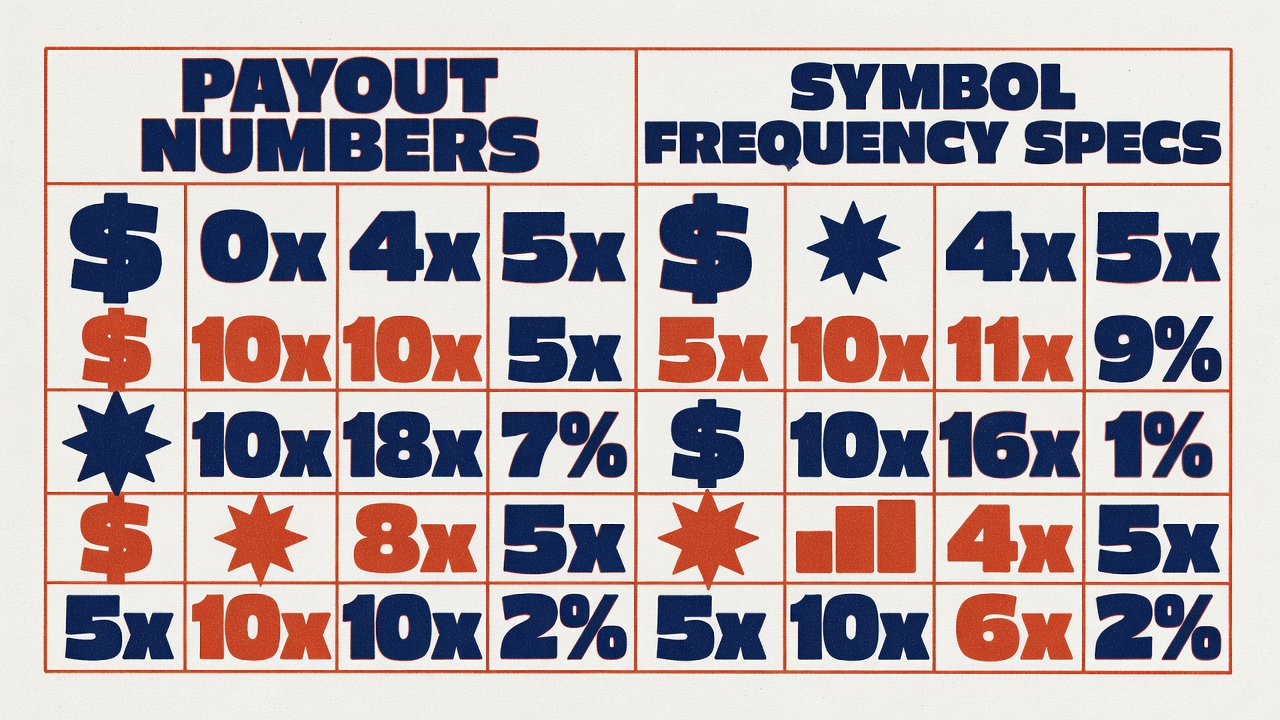
A typical paytable displays all possible winning combinations. Across the top: the win size. Below: the pay rate for achieving that win. Most modern games use a cascading structure. You scroll through it on screen, encountering information in pages rather than all at once.
This pagination itself is a design choice. Information is fragmented intentionally. A player scrolling through page three has forgotten what they read on page one.
The first thing to understand is what the paytable is not advertising: it is not advertising the return to player percentage (RTP). The RTP is your true metric for theoretical value. A paytable with an advertised jackpot of 5,000 coins means nothing without knowing the RTP.
What the Paytable Actually Reveals
If you ignore the marketing and read the pure mathematics, the paytable reveals the studio's design philosophy. How many paylines? How many symbols? How often do symbols appear on the reel?
A machine with a high-value jackpot symbol that appears once per one thousand spins will produce long dry spells. A machine with a lower-value jackpot symbol that appears once per two hundred spins will produce more frequent hits.
The paytable does not state these frequencies explicitly. But if you understand the reel composition (which symbols exist, how many of each), you can reverse-engineer the frequency. Most players do not do this. The studio prefers they do not.
The Psychological Design
Notice how paytables display wins. The largest wins are featured prominently, often at the top. A 5,000-coin jackpot is displayed in larger font than the ten-coin cherry hits that occur one hundred times more frequently.
This is not neutral presentation. This is attention allocation. Your eye goes to the large number. Your brain latches onto the large number. Your imagination constructs scenarios where you hit the large number.
The paytable is not lying. But it is directing your attention precisely away from the information that matters most: the frequency of small wins and the probability of no wins.
Reading for Real Information
To read a paytable professionally, look for volatility signals. Does the pay table show many small wins and few large wins (low volatility)? Or many large wins separated by fewer small wins (high volatility)?
Look at the distribution. If every symbol from triple-seven down to cherry pays something, the game is designed for frequent hits. If only the highest symbols pay and everything else is blank, the game is designed for infrequency punctuated by large wins.
Note the progressive element. Does the paytable mention a progressive jackpot? Progressive jacks grow across multiple machines or casinos. They generate excitement but at the cost of slightly worse base game returns.
Calculate the break-even point. What minimum number of wins do you need to sustain a losing bet size? If your average bet is five pounds and the most common win is 1.5 pounds, you are losing money faster than wins can recover it. This is the fundamental reality of slot play, and the paytable obscures it.
The Regulatory Minimum
All major jurisdictions require that paytables be displayed and that they be accurate. But accuracy is not the same as transparency. The paytable can be mathematically correct while being strategically confusing.
The Malta Gaming Authority requires paytables be "clear and comprehensible." Yet we continue to see cascading paytables that require scrolling through five pages of information. Technically compliant. Practically obscure.
The UKGC requires that operators display the RTP. But the RTP is often displayed in small text, away from the paytable itself, sometimes in a different menu entirely.
What to Know
A professional approach to the paytable involves three steps. First, find the RTP. This is your single most important number. A machine with an RTP of 95 percent will, over sufficient play, return 95 pence for every pound wagered. Nothing in the paytable can improve this outcome.
Second, understand the volatility. Are most wins small or distributed across sizes? This tells you what to expect from your bankroll. High volatility means your money will last shorter periods but occasionally spike upward.
Third, accept that the paytable is designed not to inform you optimally but to attract you toward the game. The colours, the fonts, the presentation, all of it is crafted to suggest value that the mathematics may not support.
The paytable is not evil. It is information presented with intention. Read it with that context, and you read it accurately.
Pass it on
Choosing where to play? The casino ratings score each site on 6 checks, in half stars.
See the ratings