
Payment Fees at Online Casinos: Who Typically Pays Them?
The payment ecosystem at an online casino exists at the intersection of regulation, merchant processing, and customer acquisition cost. Let us be precise about who bears which burden.
Jump to a section
A gentleman from Zurich once asked me whether the casino or the player covered payment processing fees. I explained with precision drawn from years observing the money flow.
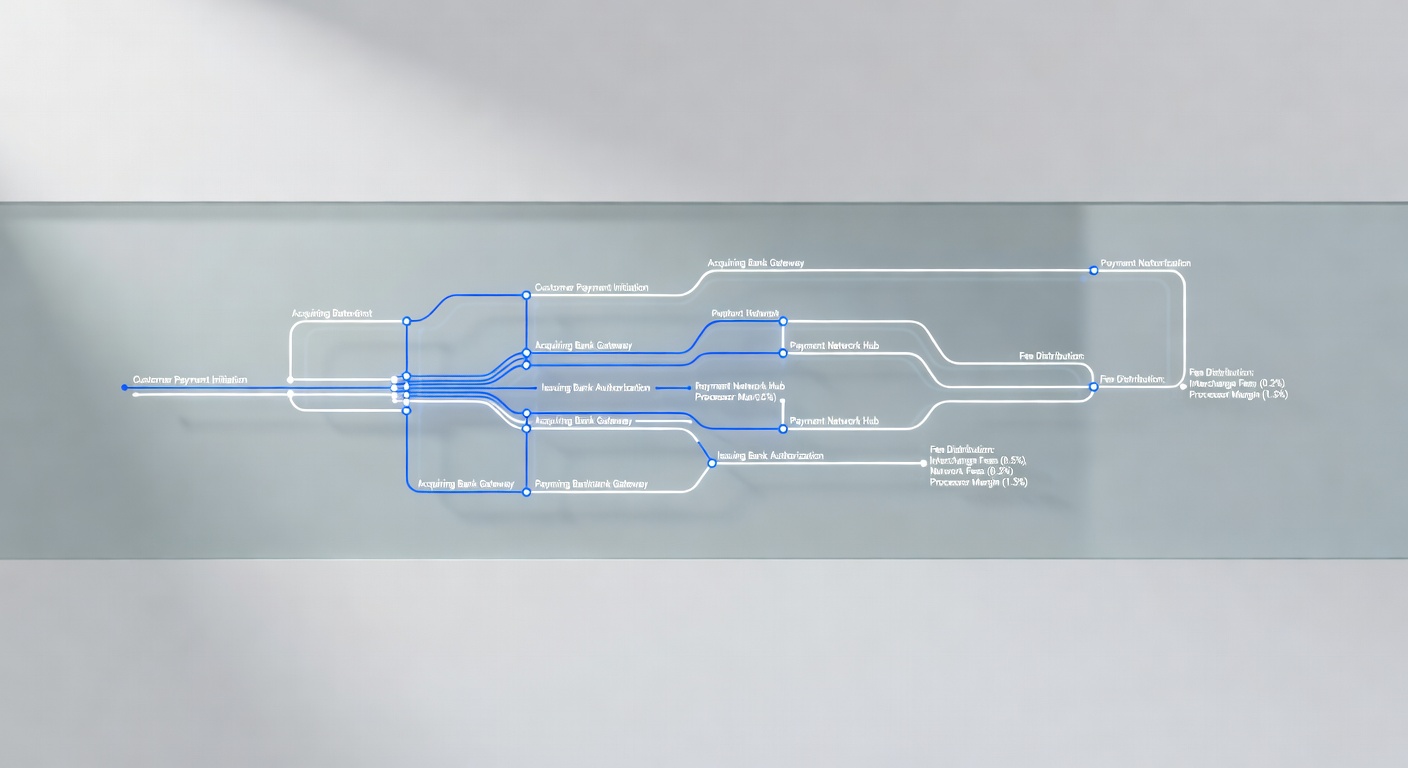
When a player deposits five thousand euros using a credit card, several parties touch the transaction. The credit card network (Visa, Mastercard) processes the transaction for 0.3 to 0.5 percent. A merchant processor captures the payment and holds it pending settlement, taking another 1 to 3 percent depending on the operator's size and processing volume. The casino's payment-service provider acts as intermediary. Each party extracts a percentage. A small operator might pay 5 percent total on a deposit transaction. A large operator with direct relationships pays 1.5 to 2 percent. This cost is absorbed by the casino, not passed to the player. The player deposits five thousand and the casino receives approximately 4,900 to 4,950 if using a credit card.
But here is where it becomes subtle. The casino accounts for this cost through the house edge or through bonus structures. A casino that guarantees a 2 percent discount for players who use cryptocurrency is factoring in its 3 percent savings on card processing. The player may perceive themselves as getting a discount when actually they are simply not being charged a fee that would have been absorbed anyway.
Withdrawals are the complication. When a player requests a withdrawal, fees escalate dramatically. A bank wire costs the casino between 8 and 15 dollars plus a percentage. A cryptocurrency withdrawal costs the casino almost nothing in processing (blockchain fees are nominal) but adds compliance burdens. The casino might charge 5 percent for bank wire but zero percent for cryptocurrency. This is not simplicity. This is incentive design.
Most regulated casinos in major jurisdictions absorb the withdrawal processing cost. A player withdrawing in the UK or New Jersey sees no explicit fee. An offshore operator may charge a percentage of the withdrawal, which is technically a fee paid by the player. The difference is regulatory. Regulated markets do not permit the fiction that fees are player costs.
Internal transfers cost nothing. Money moving from the casino's poker room to their sportsbook is a database operation. Compliance paperwork exceeds processing cost. The actual exchange is free.
Payment Method Economics
Credit card deposits: Casino absorbs 2 to 5 percent in processing cost. Bank transfer deposits: Casino absorbs 0.5 to 1 percent. Cryptocurrency deposits: Casino absorbs less than 1 percent. Ecash services: Casino absorbs 1 to 3 percent.
The economics flow backward on withdrawal. A UK-licensed casino absorbs all costs. An offshore operator may pass the costs to the player as withdrawal fees. The regulation makes the difference. A player in a jurisdiction with standards pays none. A player on an offshore platform pays more.
The Cost Absorption Game
Casinos absorb deposit fees as customer acquisition costs. They will pay the processor to get the money in because each deposit is a potential player gaining an account. But withdrawals are different. A player who has lost money has reduced value to the casino. The withdrawal is an expense being removed from the property. Some casinos still absorb these costs to maintain reputation. Others charge because they know players will pay to extract their remaining funds.
An industrialist from Geneva once left a small balance in a casino account unused for two years. When he finally requested withdrawal, the casino charged him 15 percent of the balance as a dormancy fee and processing fee combined. The fee exceeded the casino's actual processing cost by a factor of three. This is not processing. This is extraction.
Subjects in this guide
Pass it on
Choosing where to play? The casino ratings score each site on 6 checks, in half stars.
See the ratings