
Hedge Betting Strategy: When to Lock in Profit
A Macau junket baccarat dealer reflects on hedge betting, the discipline of taking certain profit over chasing larger potential gain.
Jump to a section
The high-limit room at a Macau casino operates on a different temporal rhythm than the main floor. Time moves differently when six figures are changing hands per shoe. A baccarat shoe lasts perhaps twelve minutes. A player can win or lose a month's salary in that time.
Hedge betting is what happens when a rational mind meets that kind of pressure.
The Mechanic
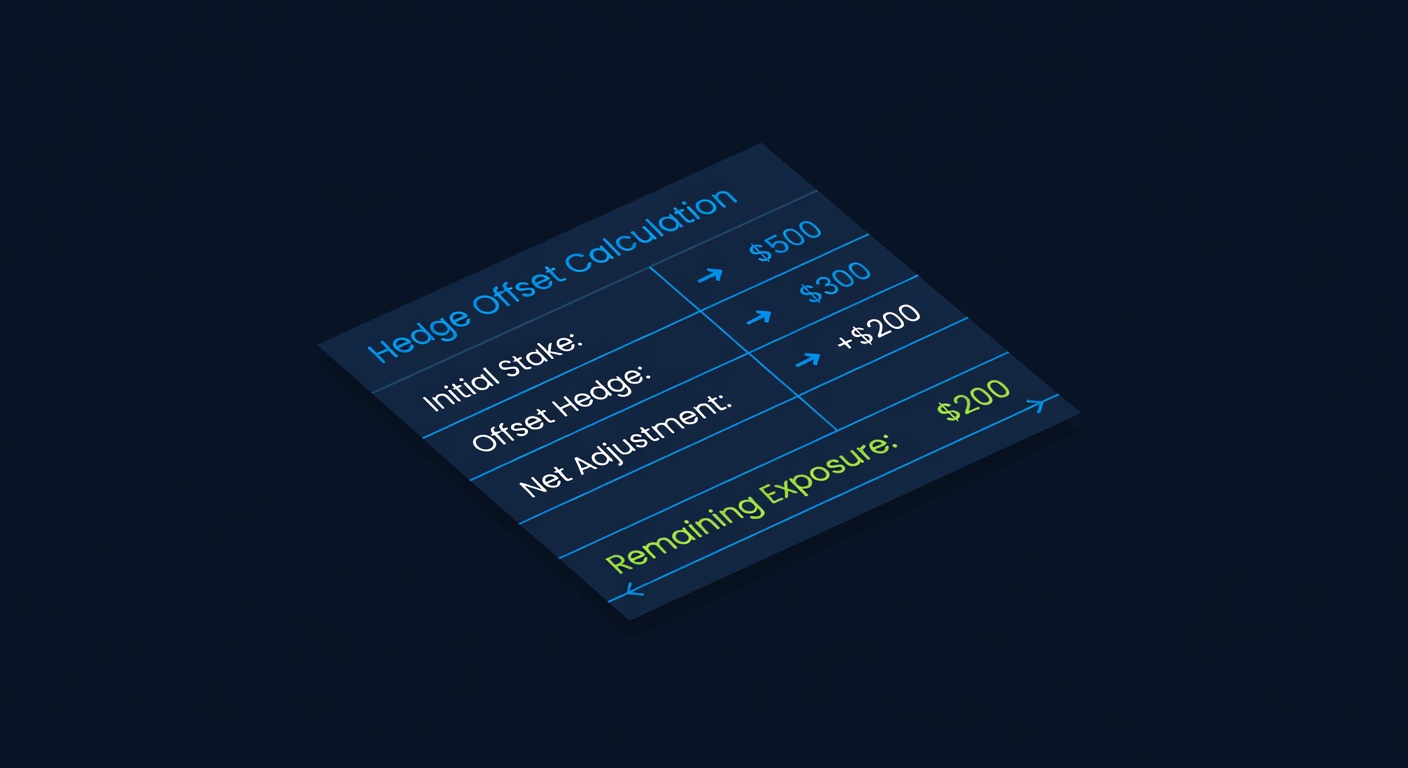
You place a wager on an outcome. Let's say you bet one thousand dollars on the Banker in baccarat. Banker wins. You are now plus one thousand, accounting for the 5 percent commission. Rather than betting that thousand again, and risking it, you place a smaller counter-bet.
You bet five hundred on Player in the next shoe. If Player wins, you win five hundred, but your original wager was one thousand, so your net profit is five hundred (the difference). If Banker wins again, you lose the five hundred hedge, but your original position in Banker is still profitable.
This is hedging. You are sacrificing upside potential (letting the one-thousand profit ride might produce more) in exchange for downside protection (locking in profit if the shoe turns).
The Mathematics
Hedging is mathematically sound in situations with incomplete information. When you have a real edge, you do not hedge. When you do not have an edge, hedging does not save you.
But in outcomes where the situation is truly uncertain, hedging trades potential profit for reduced variance. A player on a hot streak might win two thousand if they let profits ride. Or they might give it all back on a single bad hand. A hedge locks in five hundred with certainty.
The cost of hedging is the expected value you sacrifice. If Banker is objectively more likely to win the next shoe (perhaps based on shoe composition, burn card positioning, dealer patterns), then hedging costs you money by betting against a favorable situation.
The Psychological Reality
What I have observed in the high-limit room, across twenty years of dealing, is that hedging is almost never about mathematics. It is about relief.
Winning large sums creates psychological pressure. A player who began the shoe with ten thousand is now up twenty thousand. The question is not "should I hedge mathematically." The question is "can I sleep tonight knowing I have forty thousand in chips in front of me."
Hedging answers that question. By placing a counter-bet, the player converts an uncertain future (that forty thousand might evaporate) into two certain futures (either I lock in twenty thousand profit or I break even). The psychological benefit is substantial.
I have watched VIP players, whales who have been playing for hours and have genuine edges through card observation or pattern recognition, suddenly start hedging when they reach certain profit thresholds. The edge they had does not disappear. But the pressure does something to their decision-making.
The Discipline Problem
Hedging is effective only when discipline exists. Too many players hedge too frequently, converting small wins into smaller wins and burning the bankroll through the house edge on the hedges themselves.
A common mistake is hedging every winning position. If you win fifty dollars, you hedge with thirty. You win fifty, hedge thirty, over and over. You are paying the 5 percent commission repeatedly, extracting money from your own pocket.
Effective hedging is selective. You hedge when you have already won enough that losing it would be genuinely damaging. You do not hedge every small win.
The Timing Question
When to hedge is the difficult question. The players I respect most are not the ones who hedge frequently. They are the ones who play until a predetermined threshold, then stop.
A player with a five-thousand-dollar session goal plays until he reaches five thousand, then leaves. This is hedging in the form of cashing out entirely. It is the most effective hedge available.
Partial hedging (placing a counter-bet while continuing to play) preserves action but introduces the complication of tracking multiple positions. You are now playing two games simultaneously.
The Etiquette
Hedging at a high-limit table is not frowned upon, but it is understood to signal something. It signals that you have reached your psychological limit, that you are shifting from growth-seeking to preservation. The other players at the table interpret this as information.
A regular who hedges is a regular who is sane. A regular who refuses to hedge and watches enormous profits evaporate is a regular who is chasing. The patterns are readable to anyone watching for long enough.
The best hedging decision I have witnessed came from a Japanese businessman who played big baccarat, reached a particular profit level, and walked away with eighty percent of it locked in. No hedging, no complications. Just discipline.
That is the lesson. Hedging is a tool for locking in profit. The most effective use of that tool is knowing when to stop using it and accept that your work for the evening is complete.
Subjects in this guide
Pass it on
Choosing where to play? The casino ratings score each site on 6 checks, in half stars.
See the ratings