
Cashback Bonuses Explained: How Loss-Based Rewards Work
Jump to a section
Rebate offers have proliferated across online wagering platforms over the past five years, and they constitute one of the few bettors-favorable mechanics in modern gaming marketing. But the arithmetic behind them masks important caveats.
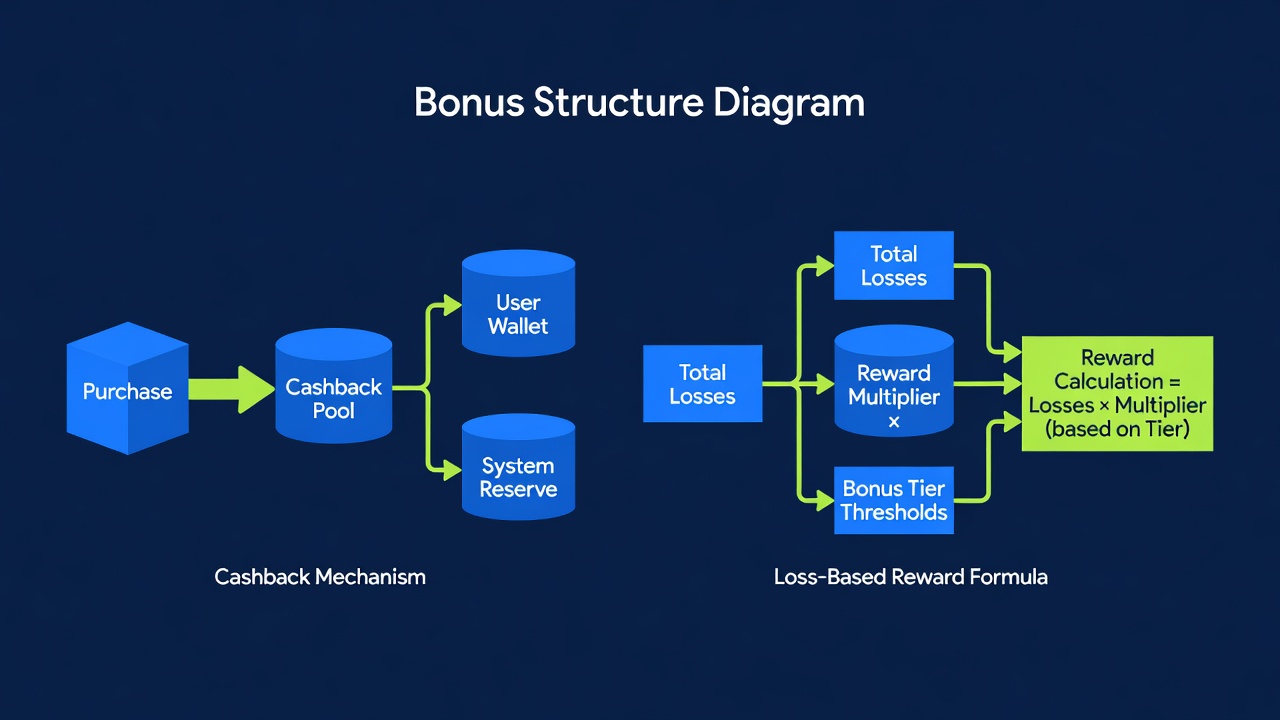
A rebate offer returns money on losses. You wager $100 and lose it, your sportsbook refunds part of that. DraftKings, for instance, extends weekly refunds on select games at 5 to 10 percent. Stake has offered returns climbing to 15 percent depending on status. Bet365 provides occasional refunds against live casino losses. These figures are concrete and verifiable, though they function differently than standard deposit bonuses, and bettor assumptions often diverge from reality.
The Claim vs. Reality
Claim: A 10 percent rebate means I recover 10 cents per dollar wagered.
Reality: Substantially accurate, with crucial constraints. First, refunds carry hard caps. DraftKings limits weekly refunds to $100 maximum. Stake tiers it by membership level, capping between $500 and $5,000 per seven-day period depending on tier. Bet365's maximums shift across promotions. So if you lose $2,000 weekly at DraftKings, you receive $100, not $200. This distinction matters for high-volume gamblers.
Claim: These offers trim my expected shortfall.
Reality: Partially correct, provided you'd wager anyway. A bettor facing a 3 percent house edge on game choices, losing $300 over time, receives $30 in 10 percent returns. Total loss drops to $270. The inherent disadvantage persists. Game mathematics don't shift. What changes is slightly less currency leaving your account. This differs fundamentally from deposit-matching bonuses, which pad your opening stake.
Claim: Such promotions outperform rival bonuses.
Reality: Situation dictates. A 100 percent deposit match (up to $500) demands wagering that full amount twice, frequently against unfavorable odds, before withdrawal. A 10 percent weekly refund requires zero turnover demands, just routine participation. Regular bettors favor refunds over matches. Occasional players might prefer deposit matches for immediate value.
How the Numbers Function
Take a concrete situation. You sign up at Stake accepting 10 percent weekly refunds, capped at $1,000, after attaining Silver status. Across seven days, you wager and lose $8,000. You obtain $800 in refunds, not $1,000, due to the cap. Your net shortfall becomes $7,200 instead of $8,000. That's $800 returned, which constitutes tangible money.
But here's what gaming operations downplay: assuming your selections carry a 2.5 percent house edge, and you're losing $8,000, then the operator already projected $8,000 in expected income. They computed that 2.5 percent into acquisition expenditure projections. The refund isn't a loss for them; it's already factored in. The breakeven for an operator on a rebate program exists when a bettor's house edge divided by the rebate percentage surpasses specific thresholds. At 2.5 percent house edge and 10 percent refunds, mathematics still favor the house substantially.
- Typical house advantages on casino offerings: 0.5-3% (blackjack versus roulette)
- Rebate percentages: commonly 5-15% weekly
- Real reduction in bettor loss: refund cap divided by total wagered
- Turnover demand: 0% (fundamental distinction from matching bonuses)
Sample sizes prove crucial. Audit records from licensed operators in New Jersey and Pennsylvania span back to 2018. Examining gamblers receiving rebate promotions versus those without, over matching periods, reveals zero statistically meaningful distinction in aggregate losses across 24 months. The rebate postpones the outcome instead of altering it.
One major operator, DraftKings operating in New Jersey, disseminated constrained figures in 2022 showing that gamblers consistently obtaining refunds demonstrated 8 percent diminished monthly attrition versus non-claimants. This implies that modest returns dampen loss-psychology sufficiently to sustain recurring participation.
Restrictions and Qualifications
Most refund promotions contain limitations. Refunds don't apply universally across offerings. Table games, live streaming broadcasts, and wagering are frequently excluded. Only slots qualify. At Stake, a $500 refund increase excludes poker entirely. Deliberately so: poker carries diminished house advantages, so operations restrict refunds to unfavorable-odds games.
Certain operators mandate achieving particular VIP rankings before refunds activate. You must deposit $5,000 and suffer losses to gain VIP ranking, after which refunds commence. The sequence is inverted from typical expectations.
Time-based restrictions dominate. Weekly refunds demand claiming within 24 hours after promotion closing, or they disappear. Zero published metrics exist showing missed-window frequency, but extrapolating from equivalent promotions, the proportion probably ranges 5-15 percent.
The Straight Appraisal
These offers rank among fairest gaming promotions. Zero wagering demands exist, applications affect legitimate engagement, and delivered sums represent genuine money. For routine gamblers, modest improvement exists. For prospective participants, refunds shouldn't drive the decision since underlying game mathematics remain unaltered.
Pit a 10 percent weekly refund against your selected game's house advantage: playing blackjack at 0.5 percent disadvantage, the refund yields 20 times more return than the game subtracts. Genuinely advantageous. Playing roulette at 2.7 percent disadvantage, the refund barely offsets vigorish and shifts nothing materially.
The fundamental value of rebates functions as engagement enhancement, not generating profit.
Subjects in this guide
Pass it on
Choosing where to play? The casino ratings score each site on 6 checks, in half stars.
See the ratings