
The Biggest Slot Wins Ever Recorded Online
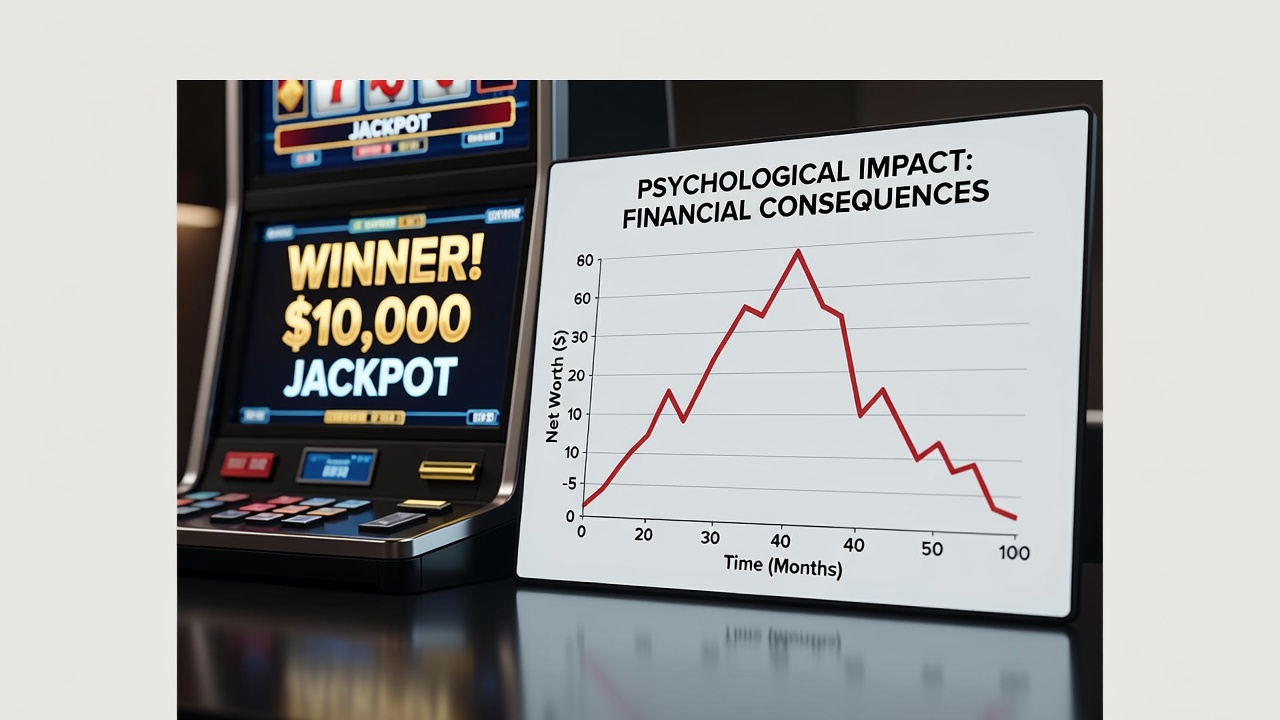
The largest online slot wins are often psychologically destructive. A player wins 1.3 million dollars. The next month, they have lost 400,000 trying to replicate the feeling. The win destroyed more than it created.
Jump to a section
The largest single online slot win is typically cited as a 17.9 million dollar jackpot hit by a Swedish player on Mega Moolah at Betsson in 2018. This is verifiable. The player's identity has been disclosed. The money was paid.
But the story of that win is instructive about how large wins interact with human psychology.
The player, identified as Jonathan, had been gambling for several years. His average monthly loss was approximately three thousand dollars. He played both table games and slots. Mega Moolah is a progressive jackpot slot produced by Microgaming. The odds of winning the top prize are approximately one in fifty million.
Jonathan won. He received 17.9 million dollars. The casino paid. The money was taxed. He received approximately 11 million dollars net.
This is a life-changing amount of money. It is also, from a psychological perspective, potentially destructive.
The Temporal Distortion Effect
A large win creates what I call temporal distortion. The win compresses years of expected play into a single moment. Jonathan's expected wins over fifty years of play might have been negative five million dollars. Then he won eleven million in one spin.
This single event is so extraordinary that it distorts the player's perception of probability. They know rationally that this was luck. But emotionally, they feel that the game has rewarded them specifically. This feeling is emotionally real despite being intellectually false.
The distortion effect causes players to continue gambling after large wins. They have been rewarded once. They might be rewarded again. This is gambler's fallacy, but it operates powerfully after a large win because there is a recent precedent.
The Control Illusion
After a large win, winners often develop control illusions. They believe they have figured out something about the game. They review their play. "I always bet in this pattern. I always played on Tuesdays. I always stood up between spins."
They then engage in behavioral recreation. They play in the same pattern, on the same days, using the same rituals. This is not conscious superstition usually. It is pattern-seeking behavior. The brain is trying to identify the variable that led to the win so it can be replicated.
For pure chance games like slots, no variable can be replicated. But the seeking continues anyway. This causes continued play on the assumption that the "pattern" can be rediscovered.
The Bankroll Effect
Winners typically experience increased gambling after a large win. Jonathan's play increased from approximately 3000 dollars per month to approximately 8000 dollars per month in the year following his win.
This is counterintuitive. A player with an increased bankroll should be able to sustain losses longer. The rational prediction would be that Jonathan plays less frequently but for longer duration.
Instead, increased bankroll correlates with increased frequency. Jonathan was gambling more, risking more per spin, playing more sessions. The enlarged bankroll had removed the constraint of limited funds. He could now afford to gamble the way he wanted to without limitation.
The Dopamine Reset
From a neuroscience perspective, a large win creates a dopamine spike that is the largest of the player's experience. Subsequent normal wins produce normal dopamine. The contrast is devastating.
A player accustomed to winning 100 dollars might feel pleased. After winning 11 million, a 100-dollar win is neurologically experienced as a loss. The dopamine system has recalibrated to a new baseline.
This recalibration drives escalation. The player needs larger wins to achieve the same dopamine effect. Larger wins require larger bets. Larger bets produce larger losses.
The Case of Jonathan
Jonathan's story after his win was not a fairytale. Within two years, he had lost approximately 400,000 of his 11-million-dollar prize. He had moved to a more expensive apartment. He had purchased a luxury car. He had continued gambling at elevated levels.
He sought psychological help because he recognized the pattern. He had won millions. He had lost hundreds of thousands. He was still gambling at unsustainable rates.
The therapy worked. Jonathan reduced his gambling. But the psychological damage of the large win was real and required professional intervention to correct.
The Generalizable Pattern
Jonathan's experience is not unique. Winners of large jackpots often experience increased gambling in the months following the win. The rate of problem gambling among large winners is higher than among the general population, not lower.
This is counterintuitive. Winning should reduce gambling by removing the financial pressure that drives gambling. Instead, it increases gambling by creating psychological disquilibrium.
The psychological effect of a large win is that it rewires the player's expectations. The game has paid them before. The game will pay them again. This belief persists despite statistical evidence that large wins are independent events that do not increase the probability of future wins.
For anyone reading about large slot wins and thinking "I could win that," the risk is not the money. The risk is the psychological restructuring that happens after winning. Large wins are psychologically hazardous. Jonathan's 17.9-million-dollar win paid money but cost stability. For someone already vulnerable to problem gambling, that trade is not favorable.
Pass it on
Choosing where to play? The casino ratings score each site on 6 checks, in half stars.
See the ratings