
Why Bet Size Matters More Than Spin Count in Slot Sessions
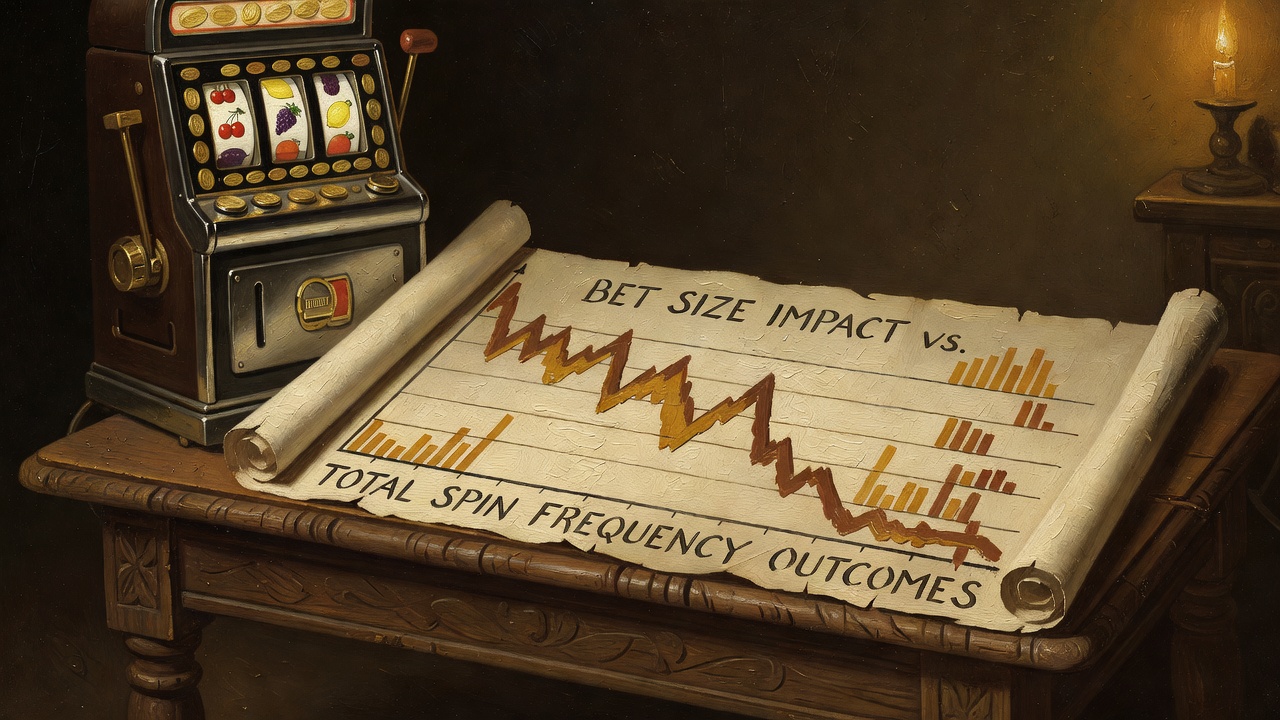
You can spin a slot machine 100 times at 1 cent per wager or 10 times at 10 cents per wager. Both exhaust your dollar. Most gamblers believe the first path is superior because it extends your session. This is the machine's most reliable advantage.
The mathematics is elementary. A slot machine has a fixed return percentage, typically between 85% and 98% depending on the model and jurisdiction. That percentage is baked into firmware. You cannot alter it with tactics. You cannot improve it by pulling slowly or pulling fast. Your expected value is determined entirely by the RTP percentage.
If a machine is programmed to 95% RTP, then for each dollar wagered, you anticipate losing 5 cents over time. One dollar at 1 cent per pull. One dollar at 10 cents per pull. Either way, you lose 5 cents on average. The payout remains constant. The total number of pulls is superficial.
What Actually Changes
Wager magnitude matters for one reason: variance. Larger wagers create bigger fluctuations in the short term. A penny per pull means 100 spins and 5 cents lost. Several pulls hit. Most miss. Individual wins and losses stay tiny. A dime per pull means 10 spins and 50 cents lost. Some of those 10 might be substantial wins. Others might be crushing losses. The amplitude is severe.
Casinos bank on this. The player betting a dime per spin feels anguish from each loss and exhilaration from each win. A 10x hit at 10 cents registers as $1. At 1 cent, the same hit feels like a dime. The neurochemical payload tracks the stake.
This explains why higher-denomination terminals occupy premium floor positions. A $5 machine registers differently than a penny machine, regardless of matching RTP. The chimes, the illumination, the placement in the whale section, everything telegraphs that serious action is unfolding.
The pull count is what breeds false agency. "I'm not hemorrhaging cash," a gambler thinks, clicking buttons. "I'm mastering this." The velocity generates an illusion that strategic play is occurring. It is not. You operate the controls. The algorithm determines all results. Your sole meaningful choice is how much you stake and how long you remain seated.
The unpleasant reality: if you forfeit $100 at the slot machine, you forfeit it at $10 per pull fast, or at $1 per pull slow. The terminal result is identical. Your $100 vanishes. The sole distinction is elapsed time. Most patrons favor the delayed version because it prolongs the amusement. That is an honest preference. Yet identify it truthfully: purchasing duration, not executing method.
Stake magnitude gains relevance when you establish a session budget and loss ceiling. If you commit to playing until forfeiting $50 or capturing $50 happens first, then stake magnitude governs duration. A penny wager stretches into hours. A dime wager finishes within 20 minutes. The machine's payout structure stays identical, yet your encounter differs sharply.
Certain terminals enforce higher minimums. A penny machine demands a floor of 5 or 10 cents. A quarter machine requires 25 cents minimum or $1. You assume lower stakes conserve capital. They do not. Minimum thresholds are engineered so both high and low machines extract funds at nearly identical speeds.
The actual choice precedes everything: whether to participate. Stake size ranks secondary. If playing occurs, risk what you can forfeit entirely, and grasp that the terminal's algorithm governs all outcomes. Your role is funding and observation only.
Pass it on
Choosing where to play? The casino ratings score each site on 6 checks, in half stars.
See the ratings